Prostate Cancer Support

Prostate Cancer Awareness Month - March

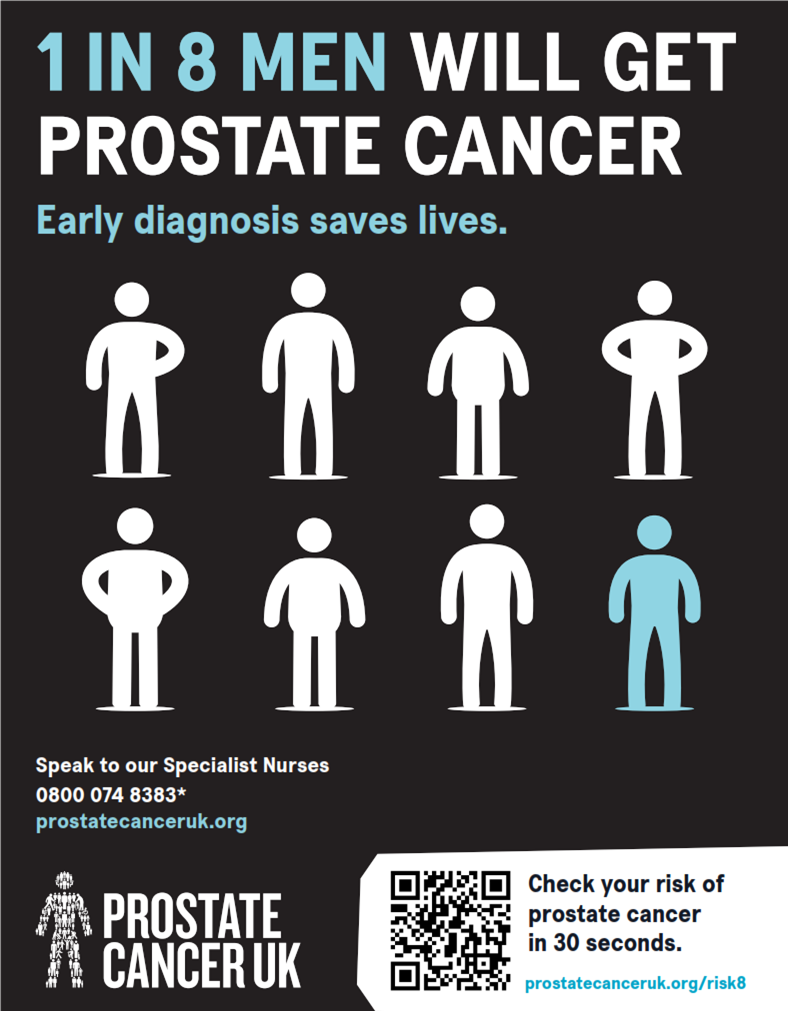
March is Prostate Cancer Awareness Month, a time dedicated to increasing understanding of the most common cancer in men in the UK. Prostate cancer affects around 1 in 8 men, with risk increasing for men over 50, those with a family history, and Black men, who face a 1 in 4 chance of being diagnosed in their lifetime.

Recent NHS figures show that prostate cancer is now the most commonly diagnosed cancer in the UK, with more than 64,000 men diagnosed in 2022 — a 24% rise from the previous year. Many cases are found at a later stage, often because early prostate cancer usually causes no symptoms at all.

When symptoms do appear, they are typically related to changes in urination, such as needing to pee more often (especially at night), difficulty starting or maintaining a flow, or feeling as though the bladder hasn’t emptied fully. Less commonly, blood in urine or semen may occur. 

Prostate Cancer Awareness Month encourages men to understand their personal risk, speak to their GP, and consider a PSA blood test — particularly important because early detection significantly improves outcomes
What is a prostate?

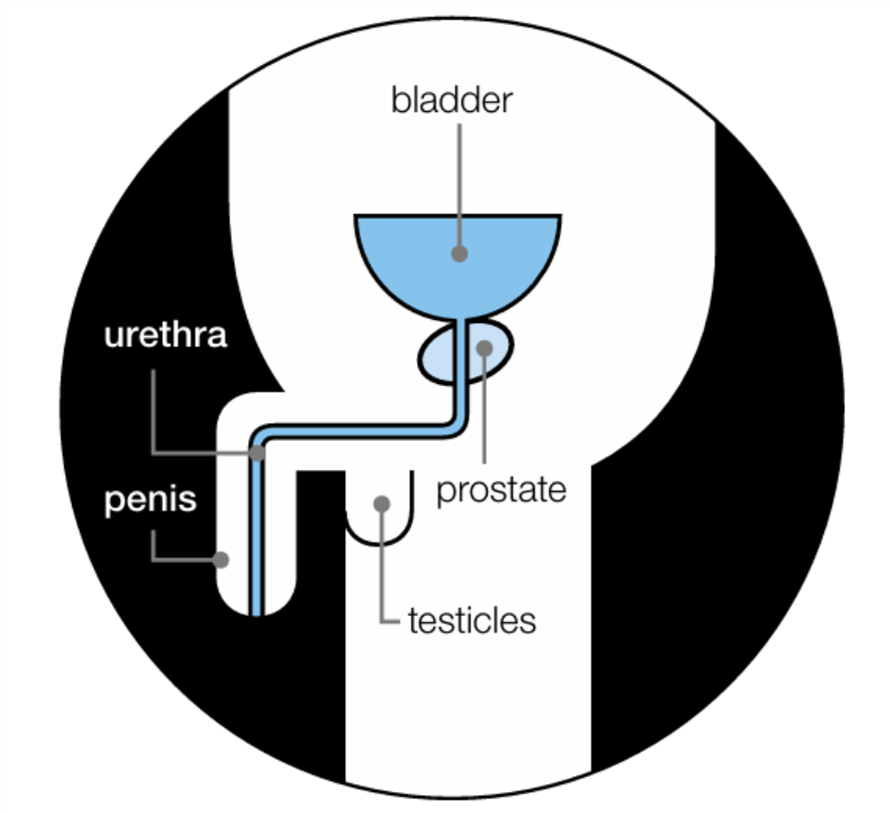
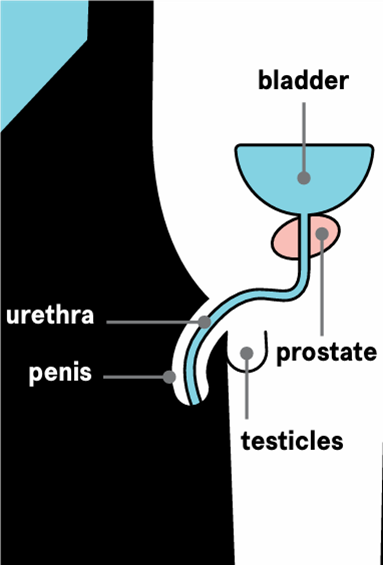
The prostate is a gland. It is usually the size and shape of a walnut and grows bigger as you get older. It sits under the bladder and surrounds the urethra, which is the tube that carries urine (wee) out of the body. The prostate's main job is to help make semen - the fluid that carries sperm. A number of factors can cause the prostate to enlarge including age, hormone levels, cancer etc

Prostate diagram

What is an enlarged prostate?

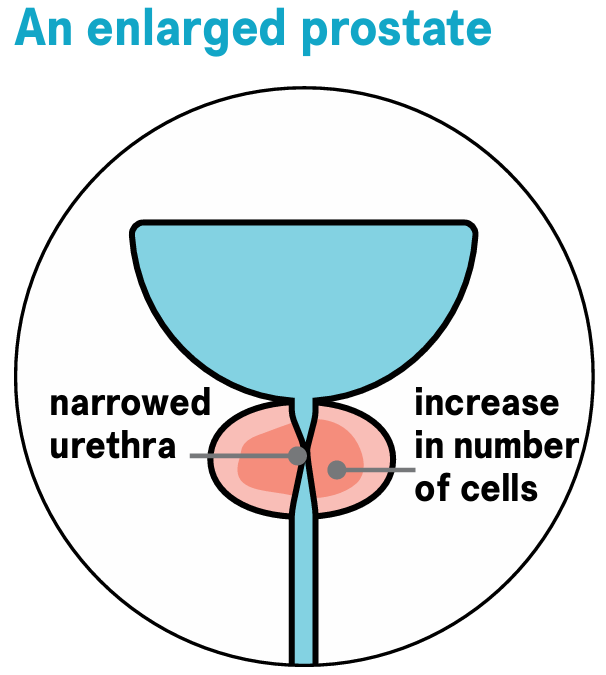
An enlarged prostate is an increase in the size of the prostate. The medical name for an enlarged prostate is benign prostatic enlargement (BPE).

Not everyone with an enlarged prostate gets symptoms, but it can press on the outside of the urethra, causing the urethra to become narrow causing urinary symptoms.

What are common symptoms of an enlarged prostate?

An enlarged prostate is the most common cause of urinary problems in men as they get older.  

Possible symptoms include:

  • A weak flow when you urinate
  • A feeling that your bladder hasn’t emptied properly
  • Difficulty starting to urinate
  • Dribbling urine after you finish urinating
  • Needing to urinate more often than usual, especially at night
  • A sudden urge to urinate – you may sometimes leak before you get to the toilet.

Enlarged prostate diagram
Diagram of prostate

What is prostate cancer?

Prostate cancer can develop when cells in the prostate start to grow in an uncontrolled way. Some prostate cancer grows too slowly to cause any problems or affect how long you live. But some prostate cancer grows quickly and is more likely to spread – this is known as aggressive prostate cancer. This type is more likely to cause problems and need treatment to stop it spreading.

In many cases, prostate cancer can also cause symptoms similar to those of an enlarged prostate, such as difficulty urinating or a weak flow, because changes within the prostate can affect how urine passes through the body. There can also be many different reasons for an enlarged prostate not just cancer but it is important to get checked.

How is prostate cancer detected?

There is no single test to diagnose prostate cancer but there are a few tests that your GP can do:

  • A urine test
  • A prostate specific antigen (PSA) blood test
  • A digital rectal examination (DRE)

Urine test - Looks to see if you have other health problems like diabetes, kdiney problems or an infection. 

Blood test - PSA (prostate specific antigen) test

DRE exam - Doctor will feel your prostate through the wall of your rectum 

PSA Blood Test

PSA is a protein produced by normal cells in your prostate and also by prostate cancer cells. It’s normal to have small amounts but this rises slightly as you get older and your prostate gets bigger.

Prostate cancer can raise your PSA level but so can other factors including an enlarged prostate, urine infection, vigorous exercise or recent ejaculation. So a raised PSA doesn’t necessarily mean you have cancer. Before having a PSA test, you should not have:

  • Exercised heavily
  • Ejaculated in the past 48 hours
  • Have a urinary infection

March for Men!

Every year 11,000 men are affected by prostate cancer, in March you can join thousands of people across the nation walking or wheeling 11,000 steps a day in March to help raise funds and awareness whilst staying active. 

Visit the Prostate Cancer UK page to find out more information about how to get involved. 

Prostate Cancer UK - Click Here

For more information leaflets about prostate cancer - Click Here

March for Prostate Cancer

Prostate Cancer UK Support

Prostate Cancer UK offers support from specialist nurses you can call them for free, confidential information and support. They can also help partners, family members, friends, and health professionals. The nurses are here for you Monday to Friday: 9am-5pm (Wednesday: 10am-5pm). Call them on 0800 074 8383

1 in 4 black men will get prostate cancer sign
1 in 8 men will get prostate cancer sign
Page last reviewed: 02 March 2026
Page created: 02 March 2026